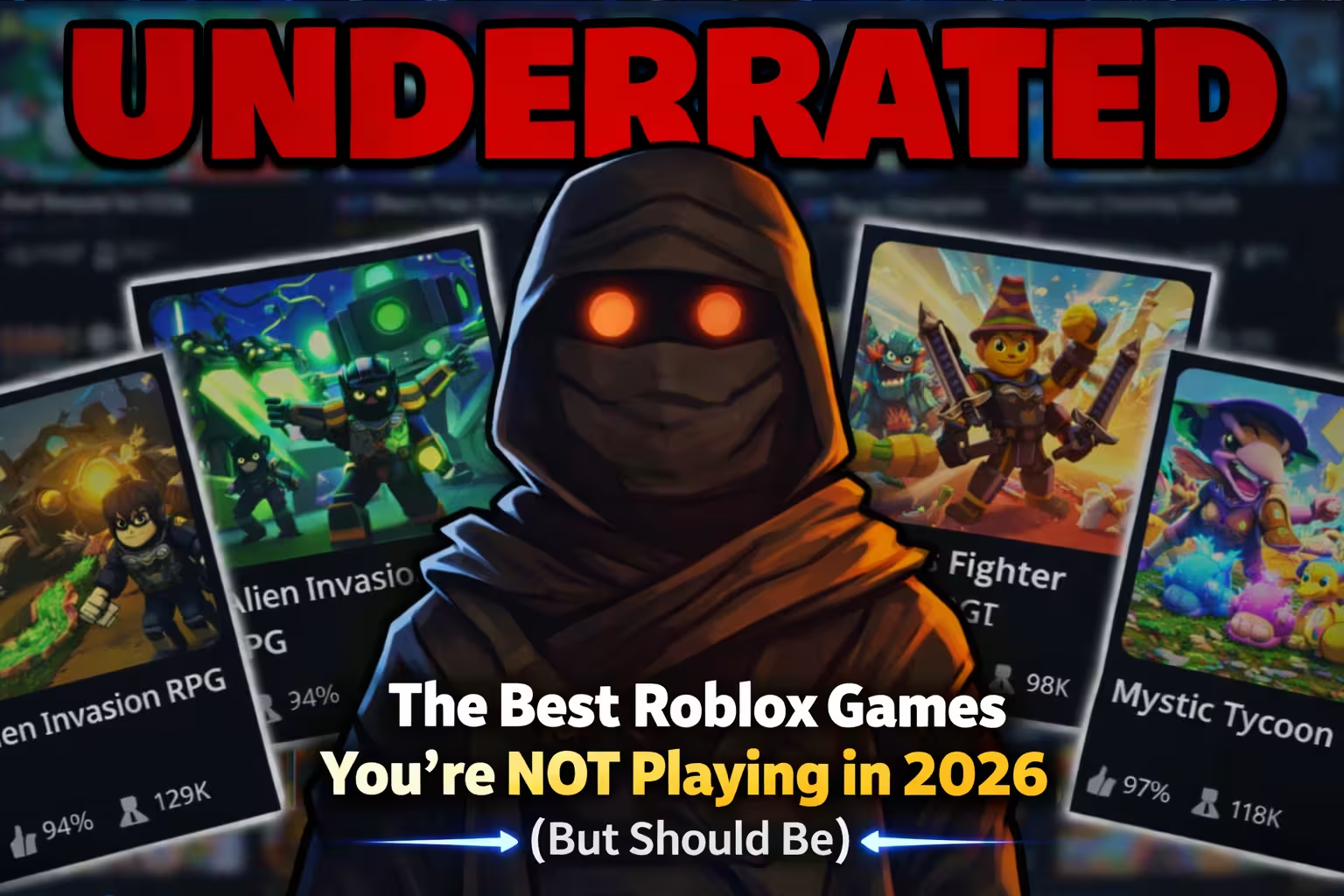
The Best Roblox Games You’re NOT Playing in 2026 (But Should Be)
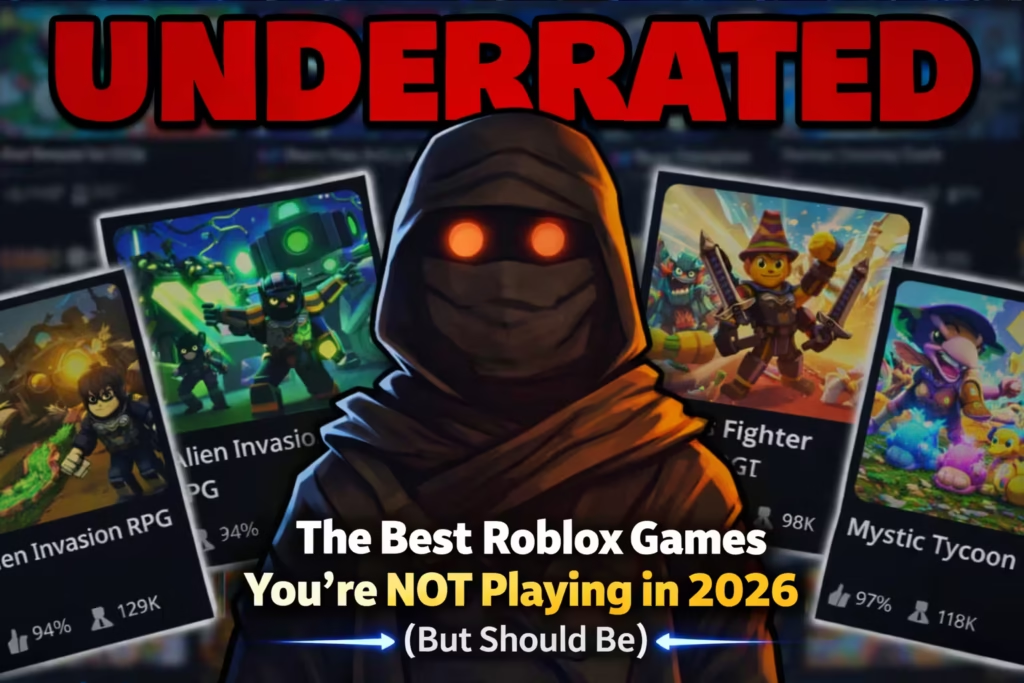
Let’s be honest. If you opened Roblox today and scrolled through the front page, you’d probably close it within five minutes. The current state of the platform is… rough. Everywhere you look, it’s the same recycled simulators, clickbait thumbnails, and what the community has lovingly dubbed “brainrot” content. Games that require zero skill, zero creativity, and somehow still rack up millions of plays.
I get it. You’re tired of joining a game only to realize it’s just another “Escape Tsunami” clone with a different coat of paint. You miss the days when Roblox felt fresh and exciting, when developers were actually trying to create something unique instead of chasing trends.
But here’s what most players don’t realize: the good games are still out there. They’re just buried under mountains of algorithmic garbage that dominates the front page. Hidden gems that actually require skill, creativity, and genuine fun with friends are thriving in the shadows, waiting to be discovered.
This guide is your treasure map. We’re diving deep into four incredible Roblox games that break the mold completely. We’re talking social deduction that rivals Among Us, horror experiences that will genuinely scare you, hilarious hide and seek with absurd animal mechanics, and stealth gameplay that demands actual strategy.
These aren’t just “decent alternatives.” These are games that prove Roblox still has incredible potential when talented developers care more about fun than front page algorithms.
Let’s rescue your Roblox experience.
Why the Front Page is Failing You (And How to Fight Back)
Before we jump into the games, we need to talk about why finding good content on Roblox has become so difficult.
The Algorithm Problem
Roblox’s discovery algorithm heavily favors games with high concurrent players and long session times. This creates a feedback loop where popular games get more visibility, which brings more players, which brings more visibility. Breaking into this cycle as a new or innovative game is nearly impossible.
The result? The front page becomes stagnant. The same types of games dominate because they’ve figured out the formula: simple mechanics, addictive progression loops, and minimal skill requirements. These games aren’t necessarily bad, but they’re rarely innovative or genuinely fun for experienced players.
The Brainrot Epidemic
“Brainrot” has become the community’s catch all term for low effort, chaotic content designed purely for viral moments and short attention spans. These games prioritize memes and randomness over actual gameplay depth.
Again, there’s nothing wrong with enjoying these games casually. But when they dominate the entire platform, players looking for substantial experiences get left behind.
The Solution
The only way to change this is to actively seek out and support quality games. When hidden gems get enough player support, they can break through the algorithm and reach the front page on their own merit. Every player who discovers and shares a quality game helps shift the platform back toward creativity.
That’s why guides like this matter. Let’s find those hidden gems.
Game #1: The Office – Social Deduction Done Right
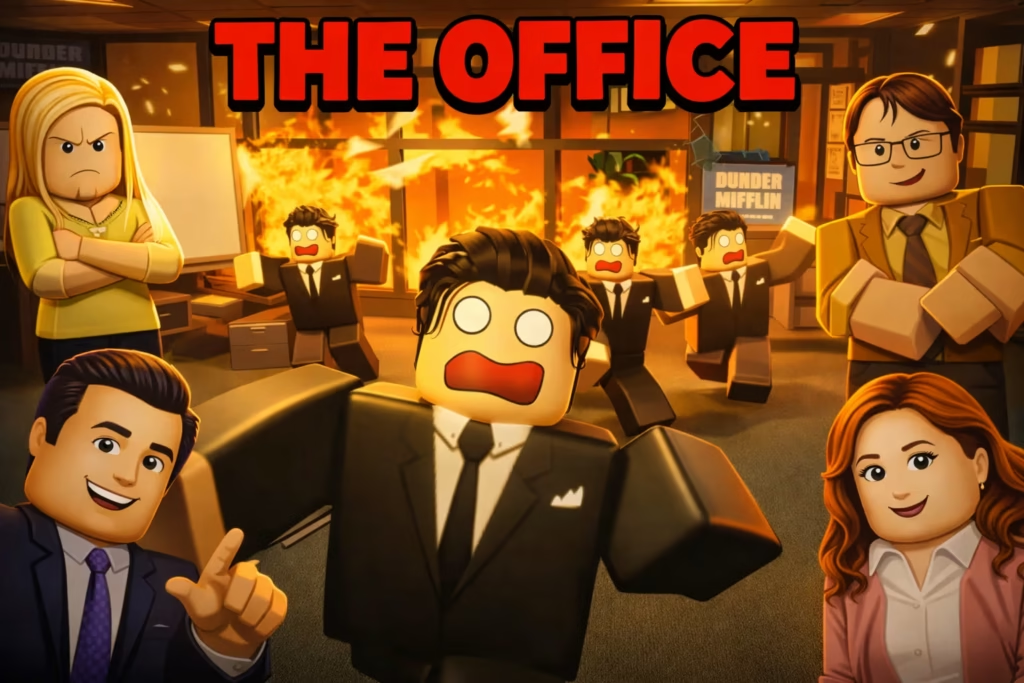
Remember when Among Us was at its peak? The tension of trying to figure out who was lying, the chaos of emergency meetings, the absolute betrayal when your best friend stabbed you in the back? That magic is alive and well in The Office, and in many ways, it’s even better.
What Makes The Office Special
The Office takes the core social deduction formula and wraps it in a hilariously mundane corporate setting. Instead of spaceship tasks, you’re getting coffee and filing paperwork. Instead of emergency meetings, you have office conference calls. The contrast between the boring setting and the intense gameplay creates comedy gold.
The game supports up to 10 players, which is the sweet spot for social deduction. Small enough that you get to know everyone’s play style, large enough that the mystery stays interesting.
The Three Roles Explained
The Manager:
You’re the authority figure, which sounds powerful but is actually the most stressful role. Your job is to keep productivity up by identifying the workers and eliminating the slackers.
You have access to the meeting board, which lets you call votes to fire suspected slackers. But fire the wrong person? Productivity tanks, and you might lose the round.
The Manager needs to be observant, strategic, and willing to make tough calls based on incomplete information. It’s basically a detective simulator wrapped in middle management aesthetics.
The Workers:
You’re the innocent crew trying to complete your job tasks. These range from simple actions like getting a soda from the vending machine to more complex tasks like organizing files or cleaning the break room.
Your primary goal is filling the productivity bar by completing tasks. Your secondary goal is helping the Manager identify who the slackers are, without accidentally getting yourself fired in the process.
The challenge is that you need to complete tasks quickly to win, but rushing around suspiciously can make you look like a slacker trying to fake productivity.
The Slackers:
Here’s where the real fun begins. Slackers are the imposters who need to sabotage productivity while pretending to be hardworking employees.
You get fake tasks that look identical to real tasks, allowing you to blend in. The trick is knowing which tasks to fake, when to fake them, and how to avoid the Manager’s watchful eye.
Advanced slackers learn to sow discord by accusing innocent workers during meetings, creating confusion and mistrust that makes the Manager’s job nearly impossible.
Why This Game Slaps
The magic of The Office isn’t in the mechanics (though they’re solid). It’s in the human interactions that emerge from the gameplay.
Proximity Chat Changes Everything:
Unlike text based social deduction games, The Office uses proximity voice chat. You can only hear people who are near you in the office. This creates incredible moments:
- Whispered accusations in the break room
- The Manager overhearing something they weren’t supposed to
- Slackers coordinating their strategy in the bathroom
- Workers desperately trying to establish their innocence to anyone who will listen
The Roleplay Factor:
Because the setting is so relatable, players naturally fall into roleplaying. Managers go on power trips, workers complain about their jobs, slackers make excuses about why they were away from their desk. The game becomes less about strict optimal play and more about creating hilarious narratives.
One of my favorite rounds involved a Manager who insisted on formal performance reviews before firing anyone. He made accused slackers defend their productivity in front of the entire office. It was ridiculous, completely inefficient, and absolutely hilarious.
The Chaos of Office Politics:
Add in mechanics like workers fighting over the good chairs, people stealing lunch from the fridge, and the coffee machine always being broken, and you have a recipe for controlled chaos that feels distinctly Roblox in the best way.
Pro Tips for Each Role
Manager Tips:
- Don’t fire people immediately. Watch patterns over time.
- Pay attention to who avoids being near you (slackers fear scrutiny).
- Use the security cameras if the office has them.
- Trust your gut, but verify with evidence when possible.
Worker Tips:
- Complete tasks near other workers when possible (provides alibis).
- If you see suspicious behavior, speak up immediately.
- Don’t wander aimlessly or you’ll look like a slacker.
- Stick together in groups when slackers are active.
Slacker Tips:
- Pretend to do tasks that take a long time (gives you reason to stand still).
- Accuse other players first to deflect suspicion.
- Learn the timing of real tasks so your fakes look authentic.
- Never let the Manager catch you doing nothing.
Game #2: FNAF Versus – Horror That Actually Scares You
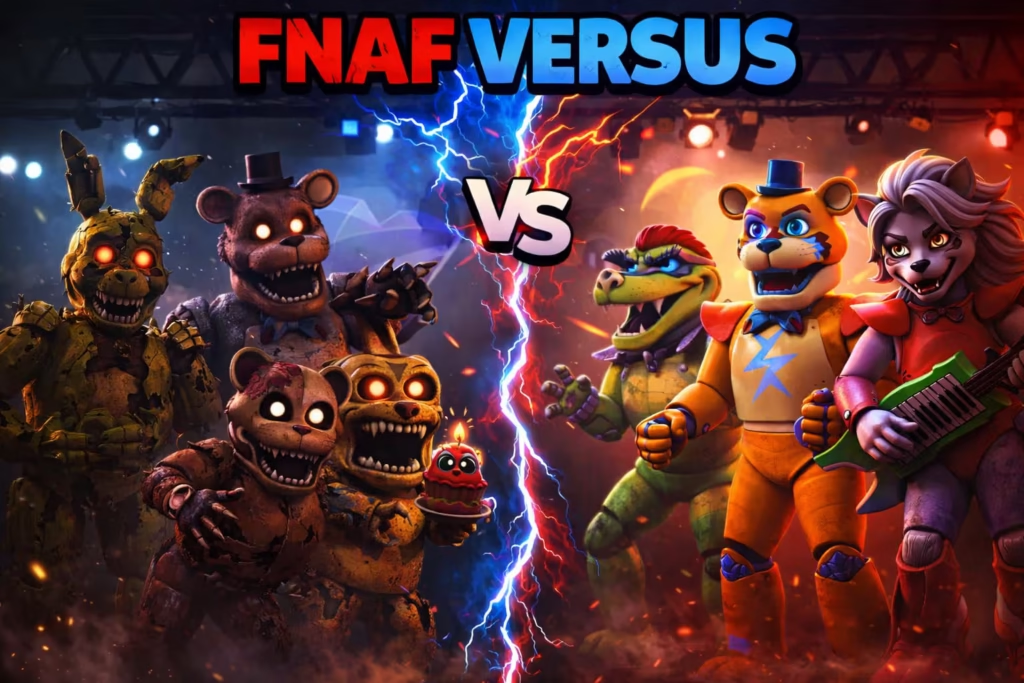
Roblox horror games are usually more funny than frightening. Jump scares lose their impact after the first time, and most “scary” games are just dark mazes with loud noises. FNAF Versus breaks this mold completely by creating genuine tension that persists even after multiple playthroughs.
Why FNAF Versus Works
The original Five Nights at Freddy’s franchise is built on anticipation and dread. You’re helpless, sitting in an office, watching cameras, knowing something terrible is hunting you. FNAF Versus captures that feeling and makes it multiplayer, which somehow makes it even more intense.
Knowing that your friends are also being hunted doesn’t make you feel safer. It makes you feel like your time is limited because you can hear them screaming in voice chat as they get caught.
The Multiplayer Modes
The game offers several modes, but they all share one thing in common: the animatronics are NOT messing around.
Classic Mode:
One player becomes the animatronic while others play as night guards trying to survive. The animatronic player has enhanced speed and can teleport between key locations, while the guards need to use cameras, doors, and lights to survive until 6 AM.
This mode is fun but can feel unbalanced if the animatronic player is significantly more skilled than the guards.
Maze Mode (The Real Star):
This is where FNAF Versus truly shines, and it’s what we’re going to focus on because it’s the mode that consistently delivers heart pounding gameplay.
Deep Dive: Maze Mode
The Setup:
You spawn in a dark, winding maze with minimal lighting. Scattered throughout are floating “memories” or glowing orbs that you need to collect. Collect enough, and you can escape. Sounds simple, right?
Wrong.
The Animatronics:
Multiple animatronics roam the maze with advanced AI that actively hunts you. These aren’t the slow, predictable bots you find in most Roblox games. These are fast, aggressive, and surprisingly smart.
Foxy: The most notorious threat. Foxy is FAST. Like, “you turned a corner and he’s already on you” fast. He has this terrifying habit of “pump faking” where he’ll appear to chase someone else, then suddenly redirect to you when you think you’re safe.
Bonnie: Slower than Foxy but more methodical. Bonnie will cut off escape routes and corner you. If you hear Bonnie’s audio cue, don’t run toward that sound… run perpendicular to it.
Freddy: The balanced threat. Medium speed, but Freddy can track you through walls. If Freddy starts chasing you, you need to break line of sight AND change direction, or he’ll predict where you’re going.
Chica: Often underestimated because she seems the least aggressive. Big mistake. Chica has the widest detection radius, meaning she’ll spot you from farther away than other animatronics.
The Tension That Makes It Work
What separates FNAF Versus from other horror games is the constant pressure. You’re not waiting for jump scares. You’re actively hunted from the moment the round starts.
The Sound Design:
Each animatronic has distinct audio cues. Footsteps, breathing, mechanical sounds. Learn these sounds and you can predict where threats are coming from. Ignore them and you’ll run directly into danger.
The ambiance is equally important. The maze isn’t silent. You hear distant screams from other players, mechanical grinding, and occasional music box sounds that signal a nearby animatronic.
The Lighting (or Lack Thereof):
You have a flashlight with limited battery. Use it constantly and you’ll die in darkness when you need it most. Never use it and you’ll run into dead ends or right into an animatronic.
Managing your light source becomes a crucial skill. Experienced players learn the maze layout and only use the flashlight at key decision points.
The Progression Pressure:
You NEED to collect memories to escape, which means you can’t just hide. You have to keep moving, keep exploring, which means constantly putting yourself at risk.
Some memories spawn in dangerous areas. Do you risk going for them or play it safe and hope to find easier ones? This risk/reward calculation happens dozens of times per round.
Pro Survival Strategies
Strategy #1: Learn the Corners
The AI in FNAF Versus is smart, but it has limitations. Animatronics struggle with sharp corners. If you’re being chased, don’t run in straight lines. Make multiple 90 degree turns in quick succession. This forces the AI to recalculate pathing, often giving you enough time to break line of sight.
Strategy #2: Audio Over Visual
Your ears are more important than your eyes in this game. Train yourself to identify which animatronic is nearby based purely on sound. This lets you save flashlight battery and react faster to threats.
Strategy #3: Never Backtrack
Once you’ve cleared a section of the maze, don’t go back through it. Animatronics often patrol areas that have been disturbed. Keep pushing forward into unexplored territory.
Strategy #4: Coordinate With Friends (But Don’t Bunch Up)
If you’re playing with friends, use voice chat to call out animatronic locations. But don’t travel as a group. Multiple players together create more noise and are easier for the AI to detect. Spread out and share information.
Strategy #5: Know When to Sacrifice Progress
Sometimes you’ll have most of the memories you need, but getting the last few would require going through a hot zone where multiple animatronics are active. Know when to play it safe and survive with fewer memories rather than greedily chasing perfection.
Why It Keeps You Coming Back
The replay value in FNAF Versus comes from the unpredictability. The maze layout randomizes, memory spawn points change, and animatronic behavior has enough variation that no two rounds feel identical.
More importantly, it’s one of the few Roblox games that delivers genuine “clutch” moments. Escaping with one memory left while Foxy is five feet behind you, or dodging Bonnie at the last second to grab the final orb… these moments create stories that you and your friends will retell for weeks.
The game respects your intelligence. It doesn’t hold your hand or give you OP items that trivialize the challenge. You win by being smart, quick, and a little lucky. That’s satisfying in a way that most Roblox games aren’t.
Game #3: Zoo or OoF – Absurd Hide and Seek Perfection
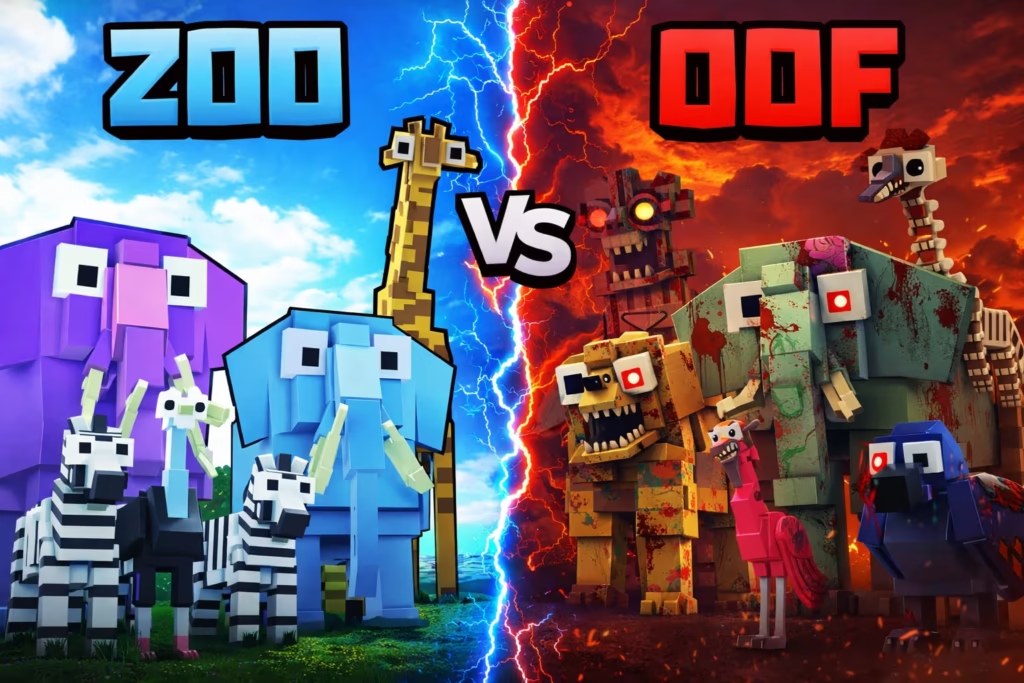
Sometimes you don’t want tension and strategy. Sometimes you just want to laugh until your sides hurt at the absurdity of trying to hide a fully grown elephant behind a mailbox. That’s exactly what Zoo or OoF delivers.
The Premise: Simple Yet Genius
Zoo or OoF is Prop Hunt meets animal kingdom chaos. Hiders are randomly assigned animals ranging from tiny insects to massive safari animals. Keepers (the seekers) have to find and tag these animals before time runs out.
That’s it. That’s the entire premise. And it’s absolutely hilarious.
The Comedy of Scale
The genius of Zoo or OoF is that it makes no attempt to help you hide effectively. You could be assigned a mouse or you could be assigned a giraffe, and the game treats both as equally viable hiding options.
Playing as Large Animals:
Getting assigned an elephant, rhino, giraffe, or hippo is both a blessing and a curse. On one hand, you’re going to get found eventually. There’s no way around it. A giraffe cannot effectively hide on most maps.
But the comedy comes from TRYING. Watching a fully grown elephant attempt to squeeze behind a thin tree is objectively funny. The animal’s legs stick out at weird angles, the trunk flops around, and the keeper is standing right there trying not to laugh while they shoot you.
Some players lean into the absurdity. They’ll position their elephant in the most ridiculous spot possible (like on top of a small building or halfway through a fence) just to maximize the comedy of the situation.
Playing as Small Animals:
On the opposite end, getting a spider, mouse, ant, or small bird is playing hide and seek on easy mode. These animals can fit in corners, under furniture, on ceiling beams, and in places that keepers would never think to check.
The challenge with small animals is staying STILL. Any movement makes you noticeable, and fighting the urge to reposition constantly is harder than it sounds.
Pro small animal players know the truly devious spots: inside decorative pots, behind ceiling light fixtures, in the cracks between wall textures. Places that aren’t technically “exploits” but are just clever uses of the game’s collision detection.
Playing as Medium Animals:
This is the “balanced” experience. Animals like dogs, cats, raccoons, and chickens are small enough to hide in semi reasonable spots but large enough that they can’t cheese the game with impossible hiding places.
Medium animals force you to actually think strategically about positioning, sightlines, and timing.
The Mechanics That Elevate It
Zoo or OoF could have been a basic hide and seek clone, but several mechanics add depth and replayability.
The Taunt System:
Hiders can press a button to taunt the keepers, which plays an animal sound (elephants trumpet, lions roar, etc.) and briefly shows their general location on the keeper’s radar.
Why would you ever do this? Because taunting awards bonus points that can unlock cosmetics and new animals.
This creates a risk/reward meta where confident players taunt from spots they believe are secure, while less confident players play it safe. The game rewards boldness, which encourages dynamic gameplay.
The Highlight Mechanic:
Every 30 seconds, all hidden animals are briefly outlined/highlighted for about half a second. This prevents the game from stalling out when someone finds an OP hiding spot and sits there the entire round.
The highlight forces you to be strategic about positioning. You can’t just find the best spot and camp. You need to move periodically or risk being spotted during a highlight cycle.
Keeper Power Ups:
Keepers aren’t completely helpless against tiny animals. They can collect power ups that spawn around the map:
X Ray Vision: Temporarily lets you see through walls, revealing animals hiding inside buildings or behind thick cover.
Speed Boost: Helps you check more locations faster and chase down animals that try to run.
Radar Pulse: Shows the general direction of nearby hidden animals, helping you narrow down search areas.
These power ups prevent experienced hiders from becoming completely unbeatable.
The Maps That Make or Break Rounds
Different maps favor different animal sizes:
Urban Maps (Cities, Towns):
These heavily favor small to medium animals because of the abundant furniture, vehicles, and architectural details to hide in or behind. Large animals struggle here.
Nature Maps (Forests, Jungles):
These are more balanced. Large animals can hide behind trees and rock formations, while small animals can hide in bushes or tree hollows.
Open Maps (Deserts, Plains):
These favor keepers and make hiding as any animal challenging. The emphasis shifts from clever hiding to strategic movement and using the highlight cycles to your advantage.
Why Everyone Should Try It
Zoo or OoF is the perfect “palette cleanser” game. Had a frustrating session in a competitive game? Jump into Zoo or OoF for some low stakes fun. Need a game that everyone in your friend group can play regardless of skill level? Zoo or OoF works perfectly.
The learning curve is nonexistent, but there’s enough depth that you’ll gradually get better at both hiding and seeking. The comedy is built into the game design rather than relying on memes or random humor, which means it stays funny even after dozens of rounds.
Plus, there’s something universally delightful about the moment when a keeper walks past your hiding spot, then slowly backs up and angles their camera downward to see you (a spider) hanging on the underside of a staircase. That “wait… was that?” moment happens constantly, and it never gets old.
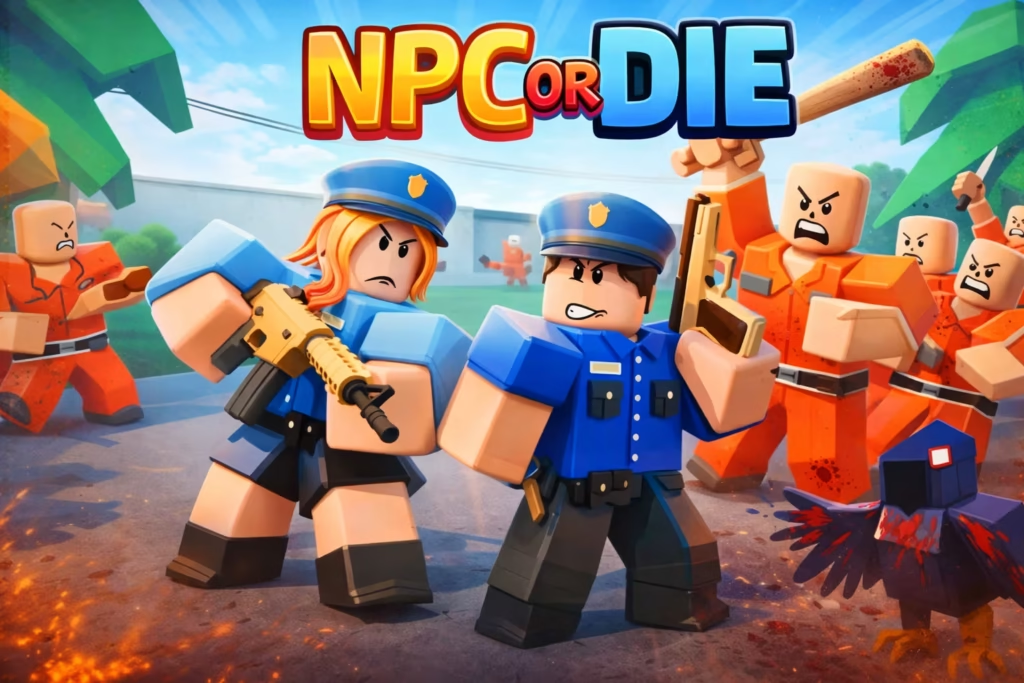
Game #4: NPC or Die – Stealth That Demands Mastery
If Zoo or OoF is the game you play for laughs, NPC or Die is the game you play when you want to feel like a stealth gaming god. This is Roblox’s answer to games like Assassin’s Creed multiplayer or Spy Party, and it’s shockingly sophisticated.
The Core Concept
NPC or Die is built on one brilliant idea: what if you had to pretend to be an AI controlled character in a world full of actual AI controlled characters?
The tension comes from the fact that human players move differently than AI. We’re smoother, more reactive, more purposeful. The AI moves in predictable, jerky patterns with specific behaviors. Your job as a criminal is to suppress every instinct that makes you move like a human and instead become the AI.
The Two Roles: Deeper Than They Seem
The Criminals:
You’re given a list of tasks to complete around the map. These might include cleaning a vending machine, picking up trash, sitting on a bench, or walking between specific locations.
Here’s the catch: the map is populated with dozens of NPC civilians doing the exact same tasks. You need to move with the same jerky, stop and start patterns that the AI uses. Walk too smoothly and you’re dead. Run at the wrong time and you’re dead. Jump even once and you’re instantly identified and shot.
Advanced criminals learn the AI’s exact behavior patterns:
- NPCs walk in straight lines between waypoints, then stop completely before changing direction
- NPCs don’t strafe or walk backward, only forward
- NPCs pause before interacting with objects, with a specific animation delay
- NPCs never adjust their path mid walk to avoid obstacles; they walk into things and then reroute
You must replicate ALL of these behaviors perfectly while still completing your tasks and progressing toward the win condition.
The Sheriff:
Armed with a gun and a keen eye, the Sheriff must identify criminals among the crowd of NPCs and eliminate them.
The challenge is that you have limited bullets (or limited lives if you shoot innocents). Every shot needs to count. Shooting an innocent NPC costs you a heart, and depending on the server settings, three strikes might mean game over.
Good Sheriffs develop almost supernatural observation skills:
- They track multiple suspicious characters simultaneously
- They know the AI patterns so well that even small deviations stand out instantly
- They position themselves strategically to observe choke points where criminals must pass
- They use audio cues (footsteps, interaction sounds) to identify patterns
Elite Sheriffs are terrifying to play against. They’ll watch you from across the map, wait for you to make ONE small mistake, and then instantly eliminate you with perfect accuracy.
The Mind Games and Meta Strategies
What makes NPC or Die brilliant is the psychological warfare between criminals and sheriffs.
Criminal Mind Games:
The Bold Play: Some criminals deliberately position themselves near the Sheriff, mimicking NPC behavior so perfectly that the Sheriff second guesses their instincts. “That CAN’T be a player, they’re too obviously in the open” is a thought that has gotten many Sheriffs killed.
The Patience Game: Wait near a task for 30 to 60 seconds before completing it, exactly like an NPC would. Sheriffs often ignore characters that have been standing in one place for a while, assuming they’re AI.
The Crowd Blend: Position yourself in the middle of a large group of NPCs doing the same task. When the Sheriff can’t isolate you visually, they can’t determine if you’re moving slightly differently than the AI.
The Predictable Route: Sometimes the best strategy is to walk the exact route that several NPCs walk, becoming one of many characters following the same path. The Sheriff can’t shoot all of you without losing all their lives.
Sheriff Mind Games:
The Fake Out: Aim at a player but don’t shoot. If they panic and run, you’ve confirmed they’re a criminal. If they continue moving like an NPC, they might actually be an NPC, or they’re a pro who doesn’t break character.
The Pressure Game: Follow a suspicious character closely. The psychological pressure often causes criminals to make mistakes they wouldn’t otherwise make.
The Elimination Strategy: Some Sheriffs memorize all the NPC spawn points and patrol routes. Any character outside these expected parameters gets immediately investigated.
The Wait and Watch: Stand completely still in a central location and just observe. Movement patterns that seem fine in isolation become obvious when you watch the same character for 20 to 30 seconds straight.
The Emotes and Animation Tricks
Here’s where NPC or Die gets really spicy: criminals can use emotes and animations, but using them wrong gets you killed instantly.
The Front Flip:
The front flip emote has become legendary in the community because it’s the ultimate flex. Successfully completing a front flip as a criminal without getting shot requires perfect timing and positioning.
The play usually involves completing a front flip right as the Sheriff looks away or right after completing a task when the Sheriff would least expect it. It’s completely unnecessary, provides no strategic advantage, and is purely for the highlight reel.
The Dance Behind:
Some madlad criminals have managed to dance directly behind an oblivious Sheriff. This is the ultimate disrespect and the community goes wild when someone pulls it off on video.
The Sit Strat:
Using the sit emote near a bench or chair can sometimes fool Sheriffs into thinking you’re an NPC that’s programmed to sit in that location. The key is timing the sit so it looks like a scripted AI action rather than a player decision.
Map Knowledge is Power
Different maps in NPC or Die have different AI patterns, task locations, and sight lines. Learning each map’s quirks is essential for both roles.
Urban Maps:
Lots of buildings and obstacles create line of sight breaks. Criminals can complete tasks while temporarily hidden from Sheriff view. Sheriffs need to constantly reposition to maintain map control.
Open Maps:
Favor the Sheriff significantly. With fewer hiding spots, criminals need to blend perfectly with AI patterns because they’re almost always visible.
Multi Level Maps:
These add vertical complexity. Criminals can complete tasks on upper floors while the Sheriff is distracted below, but getting between floors often requires movement that looks distinctly human.
The Skill Ceiling is REAL
Unlike most Roblox games where you plateau quickly, NPC or Die has an incredibly high skill ceiling for both roles.
Criminal Progression:
- Beginner: Can mimic basic AI walking patterns
- Intermediate: Can complete tasks while maintaining AI behavior
- Advanced: Can predict Sheriff positioning and adjust strategy accordingly
- Expert: Can use emotes strategically and pull off high risk plays
- Master: Can win rounds while deliberately staying in the Sheriff’s field of view
Sheriff Progression:
- Beginner: Can identify criminals who run or jump
- Intermediate: Can spot smooth movement and wrong timing
- Advanced: Can predict criminal strategies and set traps
- Expert: Can identify criminals based on subtle behavioral patterns
- Master: Can track multiple suspects and never waste a bullet
The satisfaction of progressing through these skill levels is what keeps players coming back. Every time you successfully blend in as a criminal or land a perfect shot as Sheriff, you feel like you’ve earned it through skill, not luck.
Why This Game Deserves More Attention
NPC or Die represents what Roblox could be at its best: innovative mechanics, high skill ceiling, strategic depth, and gameplay that rewards intelligence and practice.
It’s not a game you can master in an afternoon. It’s not a game where spending Robux gives you an advantage. It’s pure skill, observation, and strategy. In an era where most Roblox games prioritize accessibility and casual play, NPC or Die dares to be challenging and complex.
The community around this game is also fantastic. Players genuinely respect skilled opponents and celebrate impressive plays regardless of which side makes them. There’s a mutual understanding that the game is fun specifically because it’s hard.
How to Actually Find These Games
Here’s the practical problem: even knowing these games exist, finding them on Roblox can be challenging because they’re not on the front page.
Direct Search:
Use the search bar and type the exact game name. This is the most reliable method, but requires you to know the name beforehand (which is why guides like this are helpful).
Creator Pages:
Once you find a game you like, check out the developer’s profile. Many talented creators have multiple quality games that are equally hidden.
Community Recommendations:
Join Roblox Discord communities, Reddit threads, or YouTube channels that focus on game discovery. These communities actively share hidden gems.
Bookmark and Favorite:
Once you find a good game, favorite it immediately. This helps the algorithm recommend similar games and makes it easier to return.
Invite Friends:
These games are significantly more fun with friends. Create a private server or coordinate play times so you’re not playing with randoms.
The Bigger Picture: Fixing Roblox’s Discovery Problem
These four games prove that quality content exists on Roblox. The problem isn’t a lack of good games… it’s that the platform makes discovering them nearly impossible.
What Players Can Do:
- Actively search for and support quality games instead of defaulting to front page content
- Share hidden gems with friends and communities
- Leave positive reviews and ratings on games you enjoy
- Provide constructive feedback to developers
- Create content (videos, guides, reviews) that highlight quality games
What Developers Need:
- Keep creating innovative content even if initial visibility is low
- Engage with your community and listen to feedback
- Don’t chase trends at the expense of your unique vision
- Collaborate with other quality developers to cross promote
- Be patient; good games eventually find their audience
What Roblox (the Company) Should Do:
- Revise the discovery algorithm to promote diverse content types
- Create curated lists or featured sections for different genres
- Provide better tools for players to find games matching their interests
- Consider quality metrics beyond just concurrent players and session time
- Support indie developers with better resources and visibility opportunities
The platform’s future depends on breaking the cycle where only established games get visibility while innovative new titles struggle to find players.
Frequently Asked Questions (FAQs)
Are these games actually free to play?
Yes, all four games are completely free to play. Some offer optional cosmetic purchases or game passes, but none of them require spending Robux to enjoy the core gameplay or compete effectively.
Do I need friends to enjoy these games?
While all four games are significantly more fun with friends, they’re all playable with random players. The Office and NPC or Die especially have active communities where you’ll quickly make friends through repeated play.
Which game is best for younger players?
Zoo or Oo is the most age appropriate and accessible. It’s purely comedic with no scary content and has the lowest skill floor. The Office is also family friendly but works better with voice chat, which younger players might not have access to.
Can I play these games on mobile?
The Office and Zoo or Oo work reasonably well on mobile devices. FNAF Versus is playable but challenging due to the movement precision required. NPC or Die is extremely difficult on mobile because of the precise movement control needed to mimic AI behavior.
How active are these games’ player bases?
Player counts vary throughout the day. The Office usually has 500 to 2000 concurrent players, FNAF Versus has 300 to 1500, Zoo or Oo has 400 to 1000, and NPC or Die has 200 to 800. These numbers are healthy enough to always find games.
Are there any codes for free items or boosts?
Each game occasionally releases codes through their social media channels (Twitter, Discord). These usually provide cosmetic items rather than gameplay advantages. Check the game’s official pages or community hubs for current active codes.
What if I find these games too hard?
Start with Zoo or Oo (easiest), then The Office (medium), then FNAF Versus (challenging), and finally NPC or Die (hardest). Each game has a learning curve, but watching YouTube tutorials can accelerate your improvement significantly.
Can I create private servers for these games?
Yes, all four games support private servers. Most offer them for free or for a small Robux fee (usually 100 to 200 Robux). Private servers are great for playing exclusively with friends or practicing without random players.
Why aren’t these games on the front page if they’re so good?
The Roblox algorithm heavily favors games with extremely high concurrent player counts (tens of thousands). These games have healthy communities but can’t compete with the viral brainrot content that dominates discovery. This is why word of mouth and guides are crucial.
Can I get banned for being too good at these games?
No. Unlike some competitive games, none of these have issues with false positive ban systems. Being skilled is celebrated, not punished. However, using actual exploits or hacks will get you banned, so don’t do that.
What’s the best way to improve quickly at each game?
Watch skilled players on YouTube or Twitch, join the game’s Discord to ask questions and find mentors, practice consistently rather than occasionally, and don’t be afraid to ask for tips in game (most communities are helpful).
Can I suggest new features to the developers?
Yes! All four games have active developers who engage with their communities. Join the official Discord servers where developers often run polls about potential features and read community suggestions.
Final Thoughts: Your Roblox Renaissance Starts Now
Roblox in 2026 doesn’t have to be a wasteland of brainrot simulators and clickbait titles. Games like The Office, FNAF Versus, Zoo or OoF, and NPC or Die prove that creativity, innovation, and genuine fun are still alive on the platform.
But these games need YOUR support to survive and thrive. Every player who discovers these hidden gems and shares them with friends helps shift the algorithm toward quality content. Every positive review makes it easier for the next player to find them. Every active player in these games sends a signal to developers that innovation is valued.
The front page might be dry, but the platform isn’t dead. It’s just waiting for players who care about quality to vote with their time and attention.
So here’s your mission: Play these four games. Find the ones that resonate with you. Share them with your friends. Leave reviews. Join the communities. Support the developers.
And if you’re a developer working on something unique, something creative, something that prioritizes fun over algorithms… keep going. The players are out there, searching for exactly what you’re building. They just need help finding you.
The Roblox renaissance is possible. It starts with players like you refusing to settle for mediocrity and actively seeking out the good stuff.
Now stop reading and start playing. These games aren’t going to discover themselves, and your friends are waiting for you to show them something actually worth their time.
Stay safe, stay healthy, and we’ll see you in the office, the maze, the zoo, or blending in with the NPCs! For more detailed Roblox games guides visit Bestbuyguides.